
Cedar Sense Articles
Choosing the Perfect Outdoor Sauna for Your Home

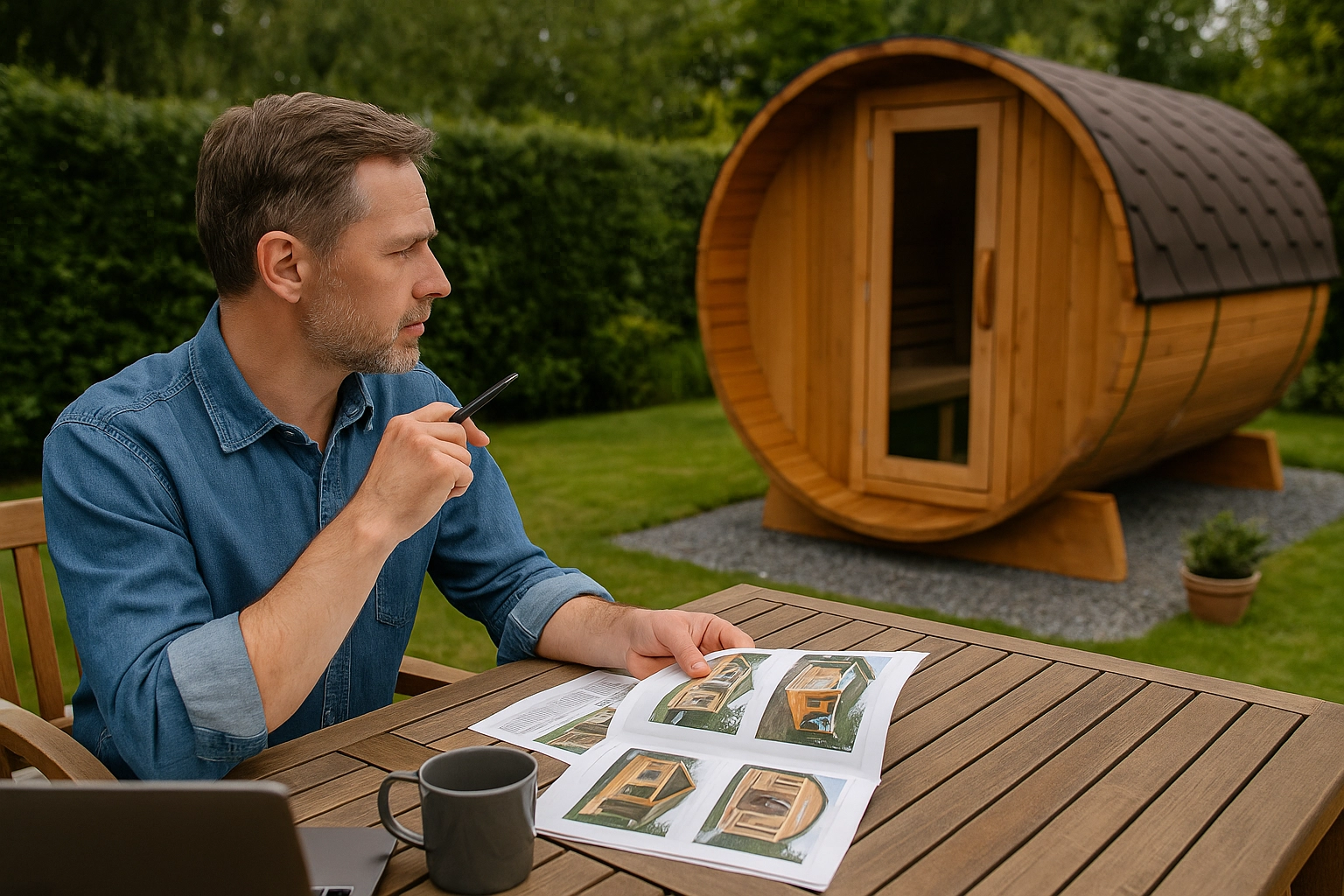
A well designed outdoor sauna can turn your backyard into a year round wellness retreat, but not all models deliver the same experience or value. If you are comparing outdoor saunas for home, the choices can feel crowded and technical. This guide cuts through the noise with clear criteria and side by side insights, so you can invest with confidence.
You will learn how barrel, cabin, and pod designs differ in heat distribution, footprint, and durability. We will compare wood fired, electric, and infrared heating for heat up time, running costs, and maintenance. Materials matter, so we will assess cedar, hemlock, and thermowood for weather resistance, scent, and longevity. Expect practical advice on sizing and capacity, site preparation, required clearances, and electrical needs. We will also weigh warranty strength, safety features, and accessories such as insulation kits, lighting, and salt walls. Finally, we will map typical price tiers and total cost of ownership, including energy use and upkeep.
By the end, you will know exactly which configuration fits your climate, routine, and budget, and which options to skip.
Criteria for Choosing an Outdoor Sauna
Design aesthetics that age well in 2026
Outdoor saunas for home in 2026 celebrate restrained forms and natural palettes. Scandinavian and Japanese minimalism, called Japandi, frames wood grains and light. Glass front walls create panoramic views and a private retreat feel. Smart touches like concealed LEDs and flush speakers are expected, not extras. For a deeper dive on design and technology cues, see these [outdoor sauna design insights](https://www.accio.com/t-v2/business/outdoor-sauna-room-trends).
Material durability outdoors
Exterior performance starts with species and treatment. Western red cedar resists decay and insects, and it stays dimensionally stable. Thermally modified options such as carbonized spruce add hardness, reduce moisture uptake, and darken elegantly. Hemlock offers a light tone and smooth surface, but needs careful finishing outside. For glazing, prioritize tempered glass near heaters, acrylic only for cooler panels and skylights.
Heating type: traditional vs infrared
Traditional heaters warm air and stones, delivering 170 to 195 F with optional steam. They feel intense and social, but typically need 30 to 45 minutes to heat and 6 to 8 kW for mid sized cabins. Infrared warms bodies directly at 120 to 150 F, with heat up under 15 minutes and 1.5 to 3 kW draw. Choose traditional for ritual pouring and higher sweat rates, infrared for lower ambient temps and energy efficiency.
Size and capacity, plan for your patterns
Map how you will use the sauna most weeks, then size accordingly. Couples thrive in compact two person footprints, while families should consider 4 to 6 seats and dual tier benches. For reference, this four to six person cedar cabin example lists 98.43 by 90.55 by 82.68 inches. Entertaining or contrast therapy groups may prefer six to eight person layouts with wider doors and standing room.
Features and accessories that elevate ROI
Look for digital or app controls, Bluetooth audio, and warm to cool LED scenes. Aromatherapy wells, backrests, and ergonomic headrests lengthen comfortable sessions. Exterior upgrades like bitumen or standing seam roofs, stainless hardware, and insulated floors boost lifespan. DIY buyers should favor modular kits with pre cut panels, pre wired controls, clear UL or CSA listings, and expansion ports for cold tubs or future lighting.
Trending Sauna Designs of 2026
Cube saunas: minimalist appeal with high-tech comfort
Cube saunas are the 2026 favorite for clean lines and glass-forward views. Flat roofs, frameless doors, and oversized panes create a gallery-like effect that complements contemporary landscaping. Look for thermally modified wood or cedar cladding and insulated wall panels for energy efficiency, along with low‑E tempered glass to minimize heat loss. Many premium cube models integrate Bluetooth audio, dimmable LEDs, and touchscreen controls, which aligns with the broader smart wellness trend. For design inspiration and material specs, see the refined forms in cube sauna examples. Pros: standout curb appeal, easy to zone as a backyard focal point, daylight-rich interiors. Cons: higher glazing can reduce thermal mass if not specified correctly, and privacy needs thoughtful siting or frosted glass.
Rustic and natural: wood-forward warmth that ages beautifully
Rustic outdoor saunas for home lean on Western red cedar and thermowood, prized for aroma, stability, and decay resistance. Knotty-grade cladding and hand-finished interiors deliver alpine character while maintaining excellent insulating performance. Reclaimed accents and blackened hardware are trending, giving a crafted, lodge-like presence that pairs well with stone patios and cold plunges. Cedar-specific guidance on grades, finishes, and moisture management is outlined in modern sauna design ideas. Pros: superior heat retention, tactile comfort, and lower glare. Cons: requires finishing and periodic re-oiling in harsh climates.
Geometric innovation: sculptural statements with custom engineering
Designers are pushing past rectangles toward faceted cubes, mirrored volumes, and organic interiors. The Canadian Grotto Sauna shows how CNC-milled wood can form cave-like curves that optimize airflow and radiant heat. Mirrored and reflective claddings help compact sites disappear into the landscape, though they demand bird-safe glass and careful permitting. Pros: true architectural centerpiece and potential design awards. Cons: custom fabrication, longer lead times, and premium budgets.
Design impact on property value, plus recommendations
Wellness amenities are translating into measurable resale gains. In many luxury and cold-climate markets, well-executed outdoor saunas lift resale value by roughly 2 to 5 percent, and listings often sell faster when spa zones are turnkey. Choose thermally modified wood, low‑E glazing, and app-based controls for efficiency and buyer appeal. DIY sauna kits suit experienced builders seeking 20 to 30 percent cost savings; turnkey builds fit clients prioritizing warranties, financing, and rapid completion. For minimalists, select a compact cube with privacy glass; for nature-led estates, specify cedar-rich rustic cabins; for design-forward properties, reserve budget for a geometric custom that anchors the landscape.
Health Benefits of Outdoor Saunas and Cold Tubs
Improved circulation and cardiovascular health
Heat from outdoor saunas for home triggers vasodilation, lifts heart rate 30 to 50 percent, and reduces arterial stiffness. In a Finnish cohort of 2,300 adults, 4 to 7 weekly sessions correlated with about 50 percent fewer fatal cardiac events. Traditional, 80 to 90 C for 10 to 20 minutes; infrared, 50 to 60 C for 20 to 30 minutes. Finish with a 1 to 3 minute plunge at 4 to 12 C to reinforce vascular training.
Enhanced muscle recovery through contrast therapy
Sauna heat boosts blood flow and flexibility, while cold constricts vessels to curb edema and soreness. Strength athletes should delay cold immersion 4 to 6 hours post lifting; endurance users can plunge immediately. Try 2 to 3 cycles, 12 to 15 minutes hot, then 2 minutes cold, hydrating between rounds. Electric-chiller tubs offer precise control and uptime; ice baths cost less but need ice, time, and tolerance.
Mental well-being and stress reduction
Regular heat lowers perceived stress by modulating cortisol and elevates endorphins and serotonin for calmer mood. Many users report better sleep and higher heart rate variability with consistent practice. Infrared feels gentler and suits longer meditative sits; traditional delivers stronger sweat and a cathartic purge. Layer breathwork, low light, and aromatherapy to lock in a repeatable relaxation ritual.
Incorporating holistic wellness into daily routines
Set a cadence you can keep, for example 3 to 5 heat days weekly with 2 contrast days. Outdoors excels after workouts, especially with a rinse station and durable rustic seating for recovery. DIY kits cut cost and customize layout; turnkey units save time and add smart scheduling and energy controls. Decide using space, electrical capacity, climate, and whether you value precision features or artisan finishes.
Product Analysis: Sun Home vs. Redwood Outdoors
Performance and comfort of Sun Home Luminar
For buyers prioritizing precision heat and refined comfort, the Sun Home Luminar stands out. Its full-spectrum infrared array, 10 heaters that target near, mid, and far wavelengths, distributes warmth evenly so users do not chase hot spots during sessions. The chassis pairs an aerospace-grade aluminum exterior with a cedar interior, a combination that resists harsh weather while preserving that classic cabin aroma. A panoramic double-pane front keeps heat stable and sightlines open, and integrated Bluetooth plus app-friendly controls simplify routines. See specifications and material details in the Sun Home Luminar 5-Person Outdoor Infrared Sauna. For smaller footprints, the Sun Home 2-Person Outdoor Infrared model mirrors these features in a compact package.
Traditional experience offered by Redwood Outdoors
If you are after ritual and steam, Redwood Outdoors leans into a classic, high-heat profile. Thermowood construction provides dimensional stability outdoors, and two-tier benching creates genuine hot and cool zones for contrast work. With electric or wood-fired heaters, cabins commonly reach 180 to 195 degrees Fahrenheit, enabling ladle-and-stone löyly that saturates the room with dense steam. The sensory experience is unmistakably Finnish in cadence, from preheat to recovery. Many units arrive as DIY kits, a practical route for homeowners who value hands-on assembly and want to control finishes for a cohesive rustic deck or garden setting.
Energy efficiency and operational costs
Infrared systems generally operate at lower wattage and shorter preheat times. A typical 5-person IR unit draws about 3 to 4 kW, warms in 10 to 15 minutes, and costs roughly 0.20 to 0.70 dollars per 40 to 50 minute session at average residential rates. Traditional electric heaters often draw 6 to 8 kW, require 30 to 45 minutes of preheat, and land near 1.00 to 3.00 dollars per hour. Wood-fired models trade utility spend for cordwood, with costs tied to local supply. Practical tip, insulate the base, add weather seals, and use a smart timer, these steps can trim energy use by 10 to 15 percent across seasons.
Customer reviews and satisfaction
Feedback on Sun Home highlights build quality, rapid heat-up, and modern conveniences, reinforced by recent industry accolades for design and durability. Redwood reviews frequently praise the depth of heat and cabin ambiance, with occasional notes about shipping timelines or post-sale coordination that vary by region. For high-usage recovery stacks and data-minded athletes, Luminar’s precise controls, faster start, and lower operating cost favor daily sessions. For heat purists who crave steam and ceremony, Redwood’s traditional setup delivers the archetypal sauna feel. Either path pairs well with cold immersion and rustic seating, a smart bundle for clients building full-spectrum outdoor wellness zones.
DIY Sauna Kits and Customization Options
Who benefits most from DIY kits
For many buyers exploring outdoor saunas for home, DIY kits strike the best balance of budget, speed, and control. Kits arrive with pre-cut panels, benches, door, hardware, and heater options, so you avoid sourcing parts and reduce project risk. Assembly is intentionally straightforward, often a single weekend for two people, and some panelized designs can be completed in hours, see the advantages of installing home sauna kits. Compared to pre-assembled or fully custom builds, kits typically lower upfront costs while still delivering premium woods and insulation profiles. They also suit buyers who want wellness access now, then plan to relocate or expand later, because many kits can be disassembled and moved. If you prioritize a turnkey experience with white-glove delivery, pre-assembled cabins win on convenience, but you will pay more for labor and freight.
Customization that fits unique home spaces
DIY kits are highly configurable, which matters when you are integrating a sauna beside a deck, a plunge area, or a view corridor. Choose footprints like 5 by 6 feet for three bathers, or scale up to accommodate a reclining bench and a changing nook. Wood species such as Western Red Cedar deliver dimensional stability and a pleasant aroma, while Hemlock suits sensitive skin. Heating paths include electric for precise controls, infrared for lower-temperature sessions and fast heat-up, and wood-burning for off-grid sites. You can specify glass area for daylight, privacy bronze tint, two-tier benching for heat stratification, chromotherapy and Bluetooth audio, and exterior upgrades that match rustic outdoor furniture. For a checklist of what is included vs bespoke, review this sauna kit vs custom build guide.
What assembly really looks like
Expect a methodical sequence, not heavy carpentry. Prepare a level base that sheds water, then stand wall panels, tie corners, set roof sections, and install benches and door. Typical tools include drill or driver, square, level, tape, stud finder, and a fine-tooth saw for trim adjustments. Electric heaters usually require a dedicated 220 V circuit with GFCI protection, while many infrared models operate on 110 V, always confirm local code and hire a licensed electrician. Plan passive air intake near the heater and an exhaust high on the opposite wall to stabilize temperatures. Pre-finish exterior cladding with a UV oil, add a roof cap for snow load, and seal penetrations to preserve R-value.
Cost efficiency, operations, and ROI
Quality DIY outdoor kits commonly land in the 2,500 to 7,000 dollar range, while comparable pre-assembled units can run 30 to 60 percent higher due to factory labor and freight. Skipping pro installation saves another 300 to 2,500 dollars on labor. Infrared operating costs are typically 5 to 25 dollars per month depending on size and frequency, and efficient electric stoves remain modest when paired with proper insulation and session timing. A realistic ROI scenario, three self-guided sessions per week versus 40 dollar spa visits, can offset a 4,000 dollar kit in roughly 12 to 18 months. Many markets also recognize private wellness spaces, often adding 5,000 to 20,000 dollars in perceived property value. For a side-by-side of kit versus custom cost dynamics, see this custom sauna builds vs home kits comparison.
Enhance Your Journey with Sauna Accessories
Weatherproof materials for lasting outdoor setup
For accessories that live outside year round, start with materials that match the longevity of your shell. Bench backrests, headrests, and exterior steps in thermally modified woods such as Thermo-Spruce or Thermo-Aspen resist cupping and swelling, which protects fasteners and joints in humid or freeze-thaw climates. Cedar accessories offer a classic aroma and natural rot resistance, but they are softer and dent more easily. Hemlock is budget friendly, although it benefits from periodic oiling. For roof add-ons like LED coves or vent cowls, prioritize 29-gauge powder-coated galvanized steel roofs for wind and hail resilience. Finish hardware should be 304 or 316 stainless; set accessories over a concrete pad or elevated deck with a 1 to 2 percent slope for drainage.
Portable essentials for a seamless experience
Portable gear keeps sessions smooth whether your sauna sits by the lake or off the patio. Cordless thermometers and hygrometers avoid wire clutter and let you validate heat and humidity zones before adding water. Choose IP65 to IP67 rated LED lanterns and waterproof Bluetooth speakers for steam-safe lighting and audio, targeting 8 or more hours of battery life. A foldable bucket and ladle, quick-dry robes, and a ventilated tote make setup and teardown faster for renters and hosts. Solar trickle chargers are practical for off-grid cabins; plug-in accessories suit permanent installations.
Aromatherapy: using essential oils
Essential oils change perceived heat and recovery. Eucalyptus can clear the nose, lavender promotes calm, and peppermint adds a crisp finish. For traditional heaters, mix 3 to 5 drops per liter of water before ladling, and avoid dripping undiluted oils on stones to prevent scorching. For infrared, use waterless nebulizing diffusers or ceramic dishes so oils never contact hot elements. Start with short 10-minute trials, store oils in amber bottles, and rotate scents to prevent olfactory fatigue.
Maximizing relaxation with customized ambiance
Lighting and sound shape how outdoor saunas for home feel from the first minute. Warm white 2200 to 2700 K strips relax the eyes, while RGB chromotherapy can cue focus or wind-down; add a dimmer and preset scenes for morning and evening. Compare compact waterproof speakers with transducer panels that turn walls into subtle sound sources; the latter preserves bench space and reduces echo. Ergonomic backrests, neck pillows, and foot lifts improve posture, and teak mats keep entryways dry. For DIY kits, prewire low-voltage conduits and mount accessories on sacrificial slats so upgrades stay painless as your retreat evolves.
Recommended Saunas and Purchase Tips
Navigating purchase decisions for high-ticket items
Start with goals, space, and budget when evaluating outdoor saunas for home. Traditional steam runs 170 to 195 F, infrared 120 to 150 F, hybrids combine both experiences. Electric heaters of 6 to 9 kW suit 4 to 6 person rooms, costing about 0.90 to 1.35 dollars hourly at 0.15 per kWh. Barrels heat fast, cubes favor glass and headroom, cabins insulate best; prioritize Western Red Cedar and budgets from 3,990 to 25,000 dollars plus.
Why cedar-sense.com should be your top choice
cedar-sense.com blends D2C pricing with concierge guidance and carefully engineered cedar construction. Precision joinery and shimmed shingle detailing help block water intrusion and seasonal movement in demanding climates. Choose compact 4 person footprints or social 7 to 9 person layouts, then add smart lighting, audio, and aromatherapy. Select labeled DIY kits with illustrated guides for savings, or choose white-glove installation for certainty and speed.
Delivery and installation factors
Prepare a level base, pavers, framed deck, or concrete pad, and confirm permits and setbacks early. Most electric rooms require 240 V at 30 to 60 amps with outdoor-rated conduit and GFCI where required. Wood-fired models need chimney clearances, spark arrestors, and safe distances from combustibles per local code. Freight crates can weigh 900 to 1,500 pounds, so verify lift-gate access, turning radius, and a dry staging area.
Maintaining longevity
After each session, wipe benches, crack the door during cooldown, and keep vents open for a short dry cycle. Treat exterior cedar with a UV-inhibiting oil every 12 to 18 months and inspect flashing before winter. Rotate stones quarterly, replace annually, vacuum heater intakes, check door seals, and test breakers twice a year. Clear snow quickly and prevent pooling water at the base to extend service life well beyond a decade.
Conclusion: Investing in Your Wellness Journey
Choosing outdoor saunas for home is ultimately an investment in consistent performance, longevity, and daily usability. Prioritize build quality, such as thermally modified woods, weather-sealed joints, and stainless hardware, so your sauna resists swelling, warping, and heat loss across seasons. Consider heater type and control precision, since infrared systems often reach session-ready temperature faster, while traditional stoves deliver ritualistic steam with higher peak heat and löyly. Today’s benchmarks include smart controls, Bluetooth audio, adjustable LED lighting, and aromatherapy, features that elevate adherence to a wellness routine. When quality is right, you gain stable temperatures, fewer service calls, and a quieter, more restorative experience year after year.
From a wellness perspective, outdoor installations transform a corner of your property into a private retreat, a trend accelerating through 2026 as buyers move away from crowded spas. Match format to goals: traditional for heat-induced sweat and steam, infrared for low-temp comfort and targeted sessions, or hybrid for households with mixed preferences. Choose a cabin or cube for insulation, privacy, and design-forward glazing, or a barrel for efficient preheat and cost-effective footprint. Opt for DIY kits if you want budget control and weekend build satisfaction; go turnkey when you prefer speed and warranty simplicity. Ready to tailor your space and explore accessories, cold tubs, or rustic furniture pairings that complete the ritual, visit cedar-sense.com for a personalized plan and curated bundles.